Hernia International Mongolia September 2026
The team consisted of 3 volunteers from Australia (Rob Bohmer, Ryan Newbold, Hairul Ahmad) and 1 from Bulgaria (Dragomir Daranov), from 7-18 September 2026. The first week was in Sainshand, a provincial town of about 30 000 population. The second week In Ulaanbaatar Second General Hospital. The trip was well organised locally by Enkhee and Dr Sonor, who sorted all out paperwork, registration, transport and hotel bookings. WhatsApp the preferred method of communication.
The work experience
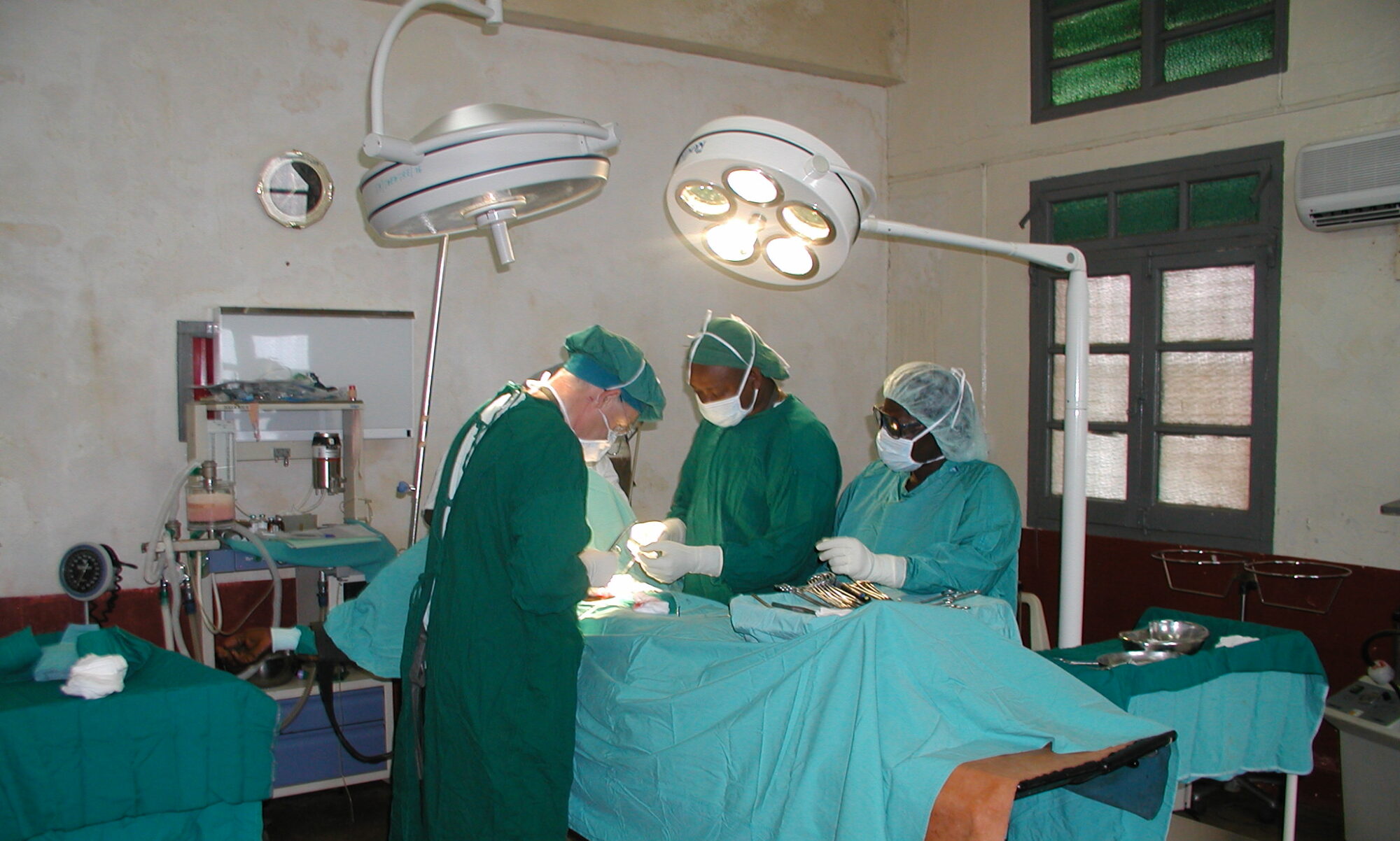
In Sainshand, the team conducted 12 operations, mainly incisional and inguinal herniae. There were 2 to 3 available theatres, starting often at 930am. With 4 visiting surgeons, local surgeons and 2-3 theatres, there was some waiting around. As in previous missions, the local surgeons were keen to learn and generally were excellent technically but need to work on pre-op selection and optimisation of the patients. There is an ICU. We provided all the mesh donated by Medtronic and Gore, all other equipment was locally provided.
In Ulaanbaatar the team conducted 26 operations, again mainly incisional and inguinal herniae, some large and complicated from liver surgery. A few were cancelled mainly due to smoking. In all cases the local surgeons operated with visiting surgeons and residents assisting. The laparoscopic equipment was good as most surgery is performed this way, including lap gastrectomies and lap liver live transplant harvesting! The surgeons are technically excellent, pre-op selection and optimisation had improved compared to the last visit. “Time out” and sharps handling could be improved especially with the high incidence of hepatitis. Post-op care seemed good but we only saw the patients on day 1 or 2 post-op and have not been involved in longer term complications such as mesh infection. Medtronic and Gore donated all the mesh used. Component separation and TAR release were often required for the complex herniae.
The visitor experience
The local surgeons, residents and staff involved with our visits were amazingly friendly and hospitable and we thank them, often they teach us more than we teach them. Inter-country work is a privilege and contributes to surgery in so many ways apart the technical side of surgery. Thanks especially to Drs Naraa and Sonor, and 2 residents (Enerel and Tuvshinjargal) who interpreted for us. Most surgeons understand some English but are shy to speak it. We were hosted very well in both places, taken to dinners, treated to a local music show and taken to the country in rural Mongolia. Both hotels we stayed at were of high standard.
Recommendations for future teams
Mongolia has made a huge advancement in laparoscopic surgery and in Ulaanbaatar, do mainly laparoscopic work including inguinal herniae. They are keen to progress their skills which means Hernia International should select surgeons with
advanced abdominal wall reconstruction experience. The local surgeons need to clearly state what they need from visiting surgeons to allow for the best experience for them and the visiting team. Saying that, the local surgeons really appreciate any input from visiting surgeons to ensure they are up to date with world standards. Although the local surgeons are skilled and keen to learn new techniques,
equipment can be difficult to get hold of and may not be in the best
working order (including lap needle holders and limited suture options).
Mesh is now available more readily but patients seem to have to
contribute to the costs. Mesh for the visit was provided by the visiting
team. Botox is not available. Visiting surgeons need to be adaptable
and weigh the balance between teaching new techniques and being
aware of safety issues this can raise. Pre-op assessment and patient
optimisation should be a key teaching issue. “Time out” posters are in
theatres but not often practised, promulgating this would be another
way visiting teams could improve safety in surgery in Mongolia. Sharps
precautions should be worked on. The junior staff work long unsafe
hours. The surgeons have a government stipulation that any “urgent”
surgery needs to be done within 2 hours, supporting the local surgeons
to change this so appendicectomies and cholecystectomies do not
need to be done after midnight, would be useful and improve patient safety.
Patients were seen in rooms with multiple people popping in and out,
privacy not an issue! It would be best to see patients with the local
surgeon present rather than a resident only, to talk about the decision making
process. There is some time spent sitting around as only 3
theatres were available in the regional hospital with 4 visiting surgeons and
emergency cases bump hernia lists.
The first morning should be set aside for a talk about the weeks plan and who is going to operate each day, discuss operation plans and the types of mesh available, basic anatomy and pre-op optimisation rather than leave it to the end of the week lecture. Maybe Ulaanbaatar should be the first week, with the first morning
teleconference shared with the country hospital and visit the country hospital second week. A local surgeon should co-ordinate theatre planning and what the Hernia International surgeons’ role is for each case and ensuring sufficient mesh supplies for each case. Where possible a local surgeon rather than resident should interpret to improve decision making.
In Ulaanbaatar second hospital, a hernia unit with 3-4 surgeons who take on the complicated hernias would be a very sensible step forward to ensure higher volume expertise, rather than all surgeons being occasional operators.
Overall a very rewarding experience and thanks to all the local
surgeons and people involved.
Rob Bohmer