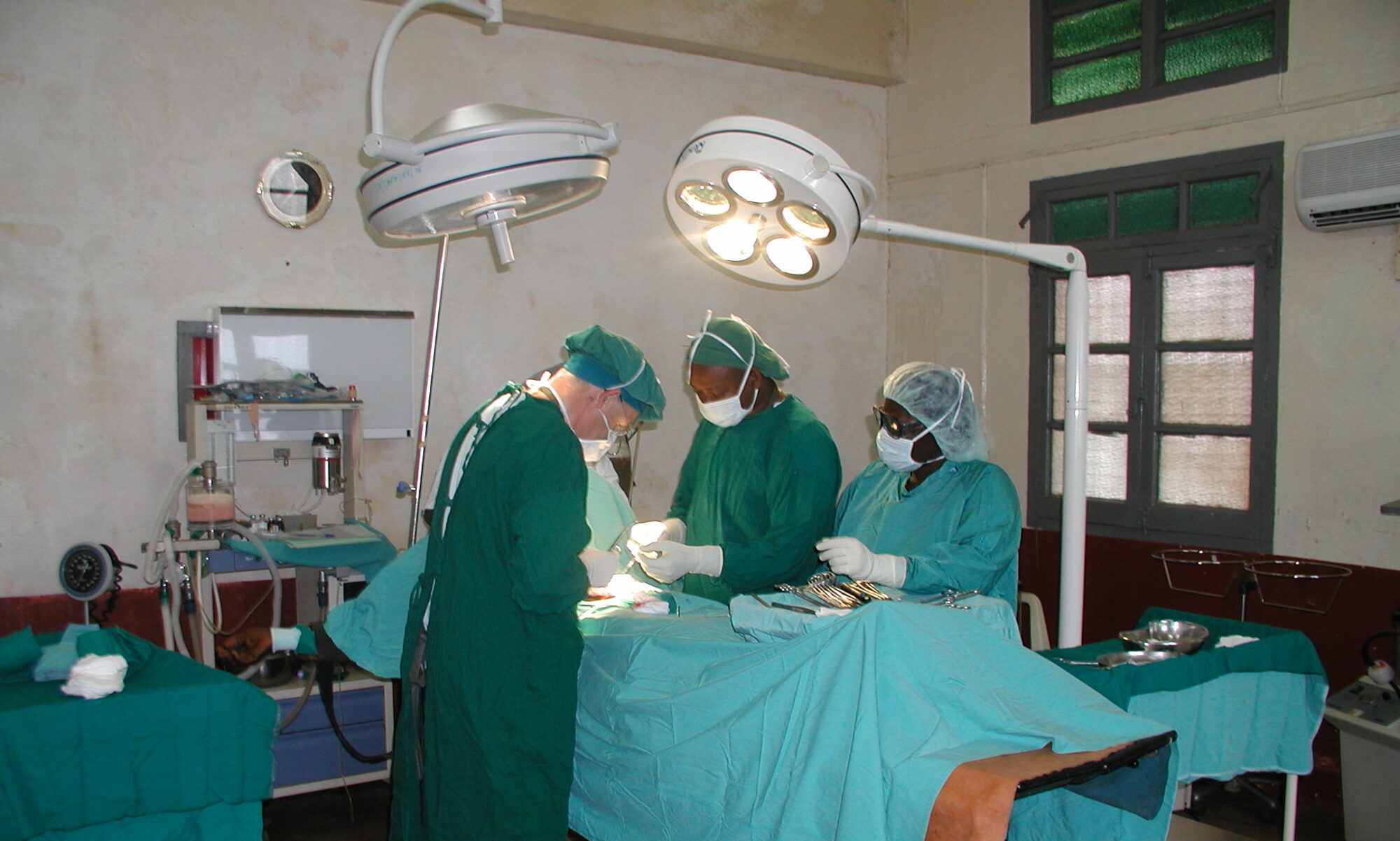
St. Gaspar Hospital, Itigi, April 19th-25th
TANZANIA 2 0 2 6
Hernia International Foundation
Following political unrest in Tanzania in November 2025, we had to postpone our planned mission for that year, and we were pleased it could take place in April 2026.
Itigi is a town in central Tanzania, located within Itigi District in the Singida Region. It comprises the wards of Itigi and Itigi Majengo, which had a combined population of 21,777 according to the 2012 national census. The town is crossed by the unpaved trunk roads T18 (linking Manyoni to Tabora) and T22 (connecting Singida Region to Mbeya Region). We reached Itigi by minibus from Dodoma, following a domestic flight from Dar es Salaam to Dodoma. Itigi is also a stop on the Central Line of Tanzanian Railways, though rail travel is notably slow.
St. Gaspar Hospital was established, and continues to be managed and supported, by the Congregation of the Missionaries of the Precious Blood, an organization with roots in Italy. Recognizing the significant need for accessible healthcare in the area, the hospital was inaugurated in 1989. Today, it serves as a key regional referral center, guided by its mission to “cure, educate, and console.”
The hospital employs 28 doctors, 103 nurses, and over 100 additional staff members. As a Level 5 facility (on a six-level scale), it is exceptionally well equipped, with clean, modern buildings that include endoscopy services, blood transfusion capabilities, a CT scanner, an ICU and IMC, a farmacy that produces its own cristaloid solutions for i.v. infusions and four operating theaters (two major and two minor). None of us had previously worked in such a well-equipped hospital during a Hernia International mission.
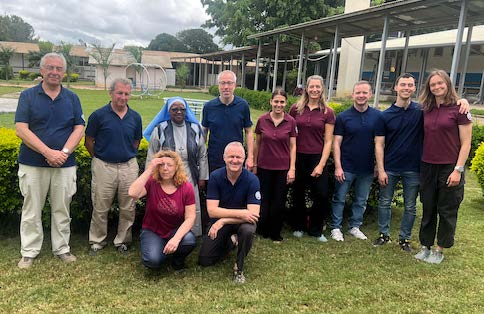
Our team consisted of ten members: three surgeons, two anesthesiologists, one radiologist, one scrub nurse, one nurse anesthetist, one ENT specialist (who is also a maxillofacial resident), and one dental student. Local consultant
surgeon Dr. Seif Nuru, together with his team of surgical residents, actively contributed to both the clinical work and the educational activities.
We brought 240 kg of equipment and medications in 11 bags and were pleased that the import process went smoothly without complications at customs. However, for the first time—despite the charitable nature of our work—each doctor was required to pay a USD 200 fee for a working permit issued by the Medical Council of Tanganyika.
The daily schedule at St. Gaspar Hospital was well structured and supportive. Each day began with a morning prayer at 7:30 a.m. for all hospital staff, followed by a scientific lecture for doctors. Our team delivered four lectures covering hernias, bowel cancer, proctology, and anesthesia. After breakfast, surgeries typically began at 9:30 a.m. (earlier on Fridays), with two operating tables running simultaneously and only brief interruptions for emergencies.
The workday usually ended around 5:00–6:00 p.m., followed by team briefings during dinner at 7:30 p.m.
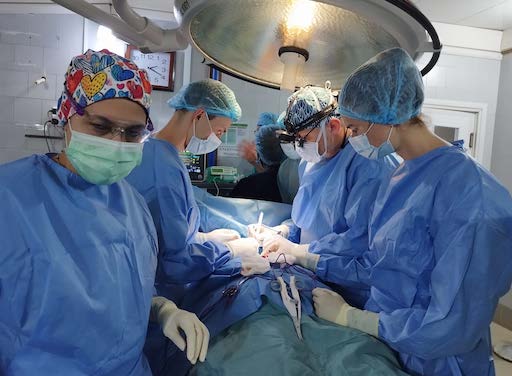
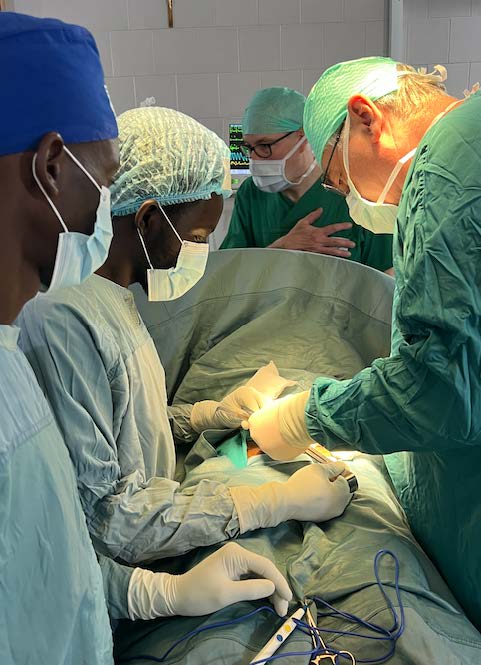
In addition to treating five patients with goiters (all managed with one-sided total lobectomy, including two big recurrent goiters, using Ligasure and optical magnification for nerve identification), we operated on 18 hernia patients—eight infants and ten adults, including inguinal, large scrotal, and complex incisional hernias. The youngest patient was two years old. Lichtenstein repair was used in the vast majority of adult patients with inguinal hernia, employing LDPE meshes.
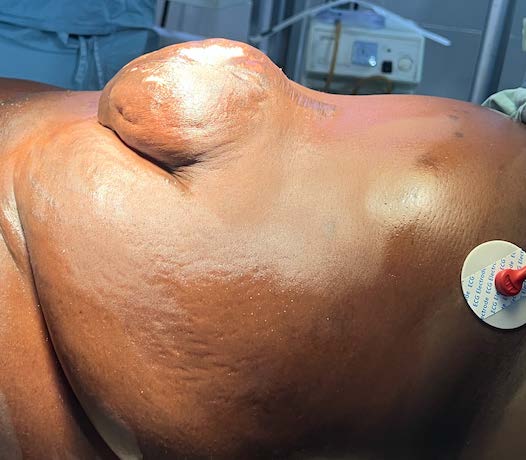
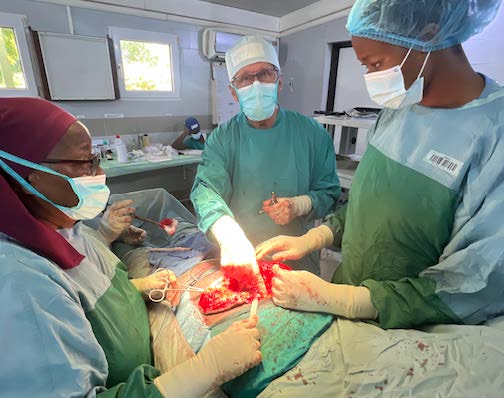
After thorough evaluation, including gastroscopy and CT imaging, we made the considered decision to perform a gastric resection on a patient with a bleeding GIST tumor of the stomach fundus. Although such a procedure is unusual for this type of mission, it was deemed life-saving for a relatively young patient and therefore justified.
We also carried out several emergency procedures, including surgery for peritonitis caused by a perforated appendix and, in collaboration with local doctors, the treatment of a sharp abdominal wall injury in an infant. Supporting and involving local surgeons in procedures was an important goal this year, and we hope to expand this collaboration further in future Itigi missions.
Operating on two tables allowed us to complete 26 procedures over four days.
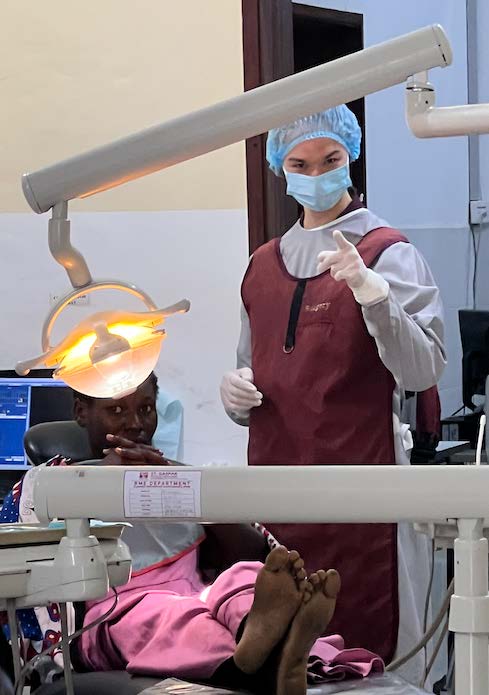
Scrub nurse Jihan provided excellent support, continuing concern for sterility in Ots – the strong work carried out by her colleague Manuela Logan on previous missions. Our ENT specialist, maxillofacial resident, and dental student were highly engaged in the dental clinic, where six demanding tooth extractions, treatment of injuries and other examinations and procedures were successfully performed.
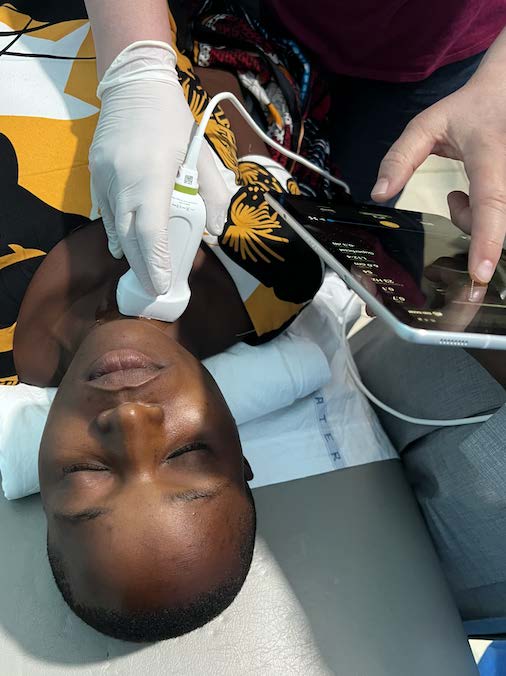
Maria carried out numerous ultrasound examinations using her portable device, which proved highly valuable preoperatively in cases of goitre and other conditions (such as hernias and hydroceles), as well as occasionally postoperatively. She was also engaged in interpreting CT scans for other patients, including those with stroke and intracranial injuries.
We were grateful to complete the program without any major complications, which we attribute to a well-managed schedule that avoided overcrowding. The minor complication, we had was a SSI in an obese (BMI>35) adult female after appendix perforation and 4-quadrant peritonitis. In the following outpatient treatment she received local skin wound management and prolonged oral antibiotics. Sufficient time was dedicated to each procedure, ensuring careful, unhurried care, particularly for HIV-positive patients (approximately 4–5% in this region of Tanzania).
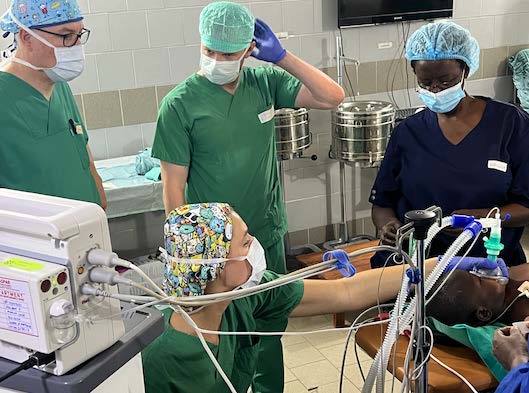
Special thanks go to the outstanding anaesthesia team—these procedures would not have been possible without their support. In OT1, spinal anaesthesia was most commonly used, with general anaesthesia administered in some cases, whereas procedures in OT2 were performed exclusively under general anaesthesia. They helped out in many others surgeries, performed by local surgeons, when needed.
We were comfortably accommodated in the so called St. Gaspar Motel within the hospital complex and had there both breakfast and dinner (sometimes also lunch).
The positive working environment and strong sense of camaraderie were the result of thorough mission preparation over several months, with special thanks to Dr. Seif Nuru, Father Justin, medical director Dr. Simon, vice medical director Dr. Hilda and all those involved.
Team Members:
Prof. Mirko Omejc, MD, PhD – consultant surgeon, Ljubljana Medical Centre, Slovenia.
Prim. Miran Rems, MD, MSc – consultant surgeon, Slovenia.
Katalin Wiese, MD – consultant in anaesthesia, critical care and emergency medicine, Landeskrankenhaus Feldkirch, Austria.
Hannes Lienhart, MD, MSc DM – consultant in anaesthesia, critical care and emergency medicine, Landeskrankenhaus Feldkirch, Austria.
Marija Jekovec, MD – consultant radiologist, Ljubljana Medical Centre, Slovenia.
Anže Jerman, MD – ENT consultant and maxillofacial resident, Ljubljana Medical Centre, Slovenia.
Avelina Temba, MD, consultant general surgeon, Korogwe, Tanzania. Daniel Ketterer, anaesthesia nurse, Landeskrankenhaus Feldkirch, Austria.
Jihan Göggel, scrub nurse, Krankenhaus Grabs, Switzerland.
Nika Blažka Gorjanc – dental student, Medical faculty, Ljubljana, Slovenia. Asist. prof. Jurij Gorjanc, MD, PhD, FRCS, FEBS AWS – consultant surgeon, team leader, Klinikum Klagenfurt, Austria.
Our sponsors:
Bernhard und Karin Chwatal Medical Center Gorjanc
Implantološki institut / Implant Institute Chemomedica Wien
LKH Feldkirch Spital Grabs Kirurgija Bitenc Stiftspfarre Gurk,
Kan. Msgr. Mag. Gerhard Kalidz, Gurk
Mag. Dr. Walter Ganster – Steuerberater Völkermarkt Goldhaubenfrauen Gurk
Gurker Bänderhutfrauen Friesacher Bürgerfrauen