Team members:
Petr Bystricky (Surgeon, Czechia)
Michael Brownstein (Anaesthetist, Australia)
LiLin Hong (Anaesthetist, Australia)
Heidi Miller (Surgeon, USA)
Cea-Cea Moller (Surgeon, Australia)
Dominique Robert (Surgeon, Australia/France)
Richard Turner (Surgeon, Australia)
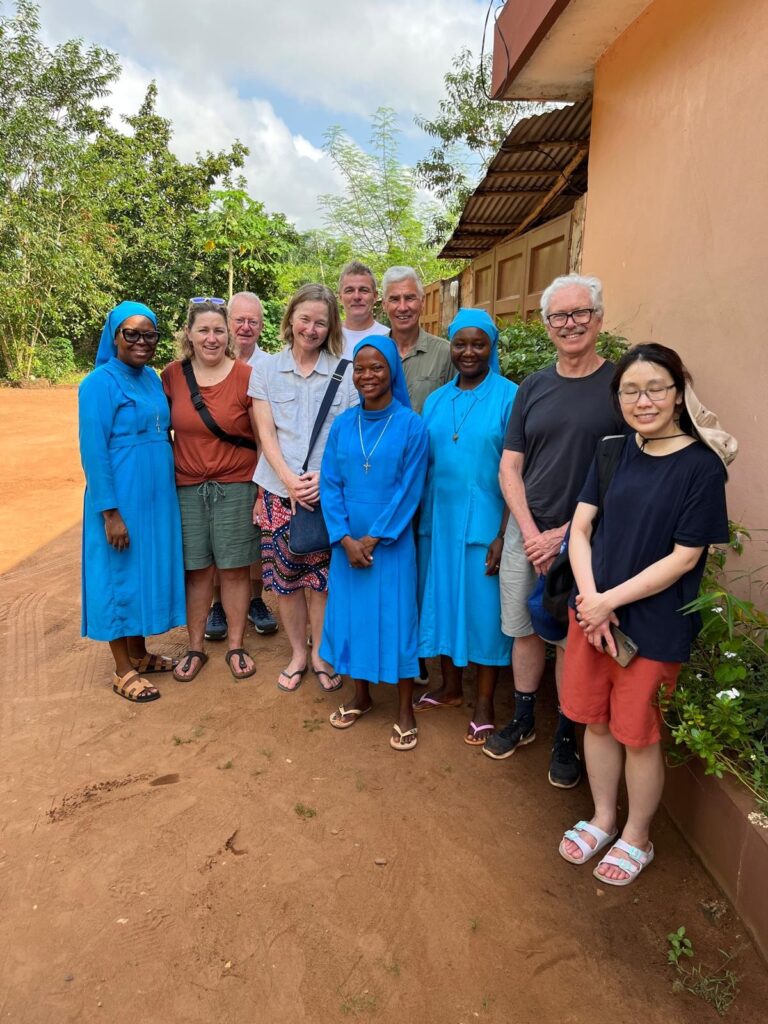
I had previously undertaken Hernia International missions to the Auberge de l’Amour Redempteur, Dangbo in 2017 and 2018. Returning this year, even just arriving at Cotonou Airport, it was evident that Benin had experienced a quantum leap forward in terms of its economy and the reforms that were taking place across all sectors of society. The first inkling of this, some months before the mission started, was the requirement to provide detailed, certified documentation regarding team members’ citizenship, medical and speciality qualifications, and credentialing in their respective home countries. Although this is a routine requirement for most missions, the fact that it was not such an issue pre-COVID suggests that the government is keen to rein in unscrupulous operators. Fair enough.
Once the above documentation was approved by the Ordre National des Médecins du Bénin, some weeks after we had submitted it to our host (Dr Sr Opportune Tosse), a letter was produced detailing each team member’s role and responsibilities. This in turn had to be sighted and approved by the Ministry of Health before we could commence our mission. Due to procedural delays, this final official sign-off could not occur until the morning of our first operating day. We were more or less assured that this would be a rubber-stamp process, so we spent the previous day (a Sunday) assessing the 50 or so patients that Sr Opportune had previously triaged. By the end of the day, we had scheduled approximately 45 cases for the coming week. These were predominantly large inguinal/inguinoscrotal hernias in adult males, a few hydroceles, and occasional skin lesions – including one highly disfiguring keloid in a young man, which was eminently resectable and had the assurance of adjuvant steroid injection.
I had a sinking feeling that something was seriously wrong when Sr Opportune came to my accommodation at 0730h on Monday morning. A surprise curveball had been thrown overnight. The Ministry would not approve our mission unless it was sponsored by a local specialist. Despite her medical degree, Sr Opportune did not qualify, as she was not a surgeon, nor did she have any immediate contacts to call upon at the last minute. If we had put knife to skin, we would have risked imprisonment!
The November 2025 HI mission to Dangbo was therefore over before it started. The nuns continued to kindly feed and entertain us for a couple more days before we dispersed. Because the Ministry would normally require three months to vet a potential sponsor Sr Opportune will need to cancel two other specialist missions in the coming months. Like us, I daresay those people have already booked airfares and leave from their usual work.
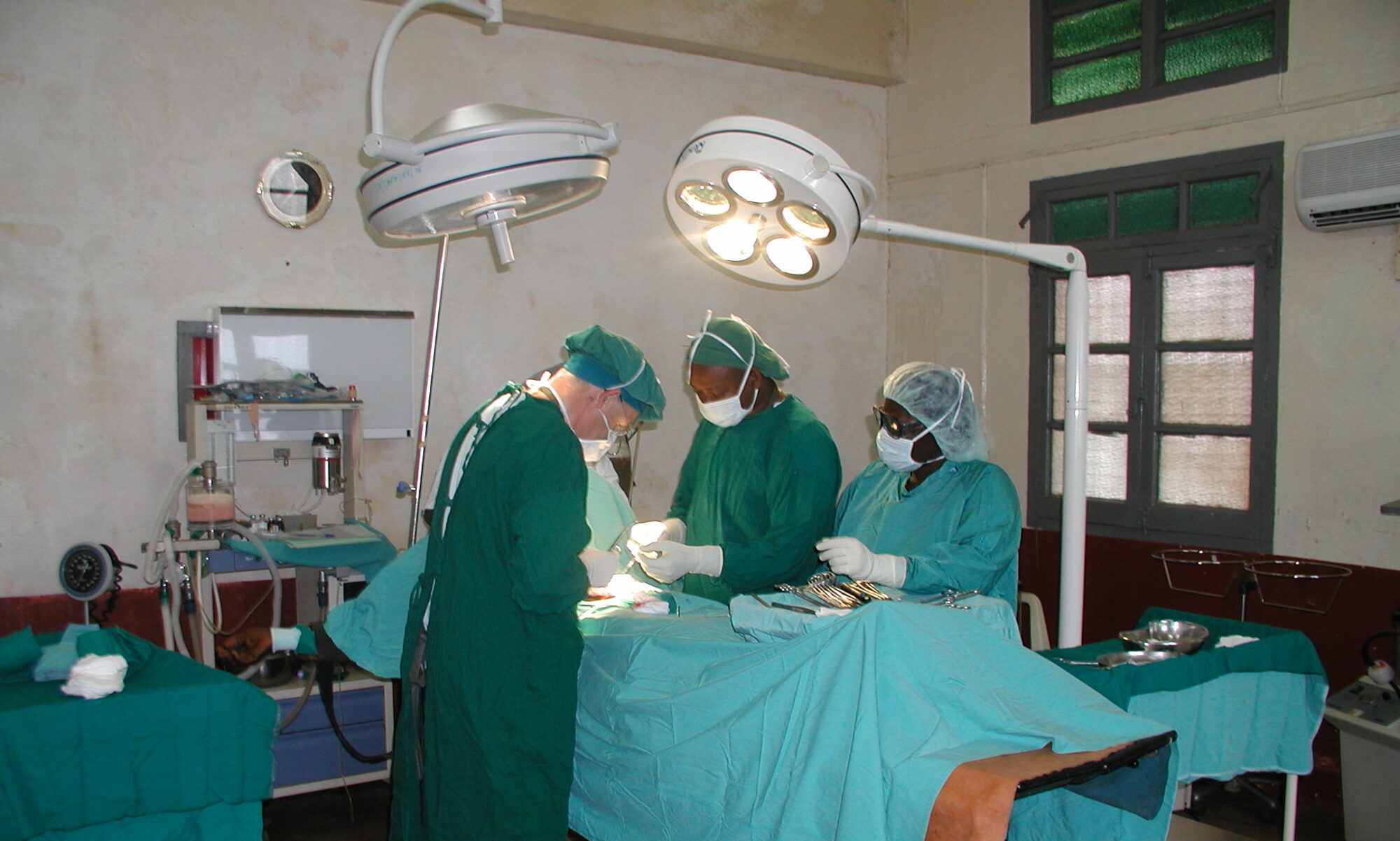
Reflecting on this sorry episode, I do not feel that official corruption played a part. No amount of ‘payment from the heart’ could have allowed us to proceed. Our mission, like many others, fell victim to the justified raising of standards in health care in low-middle income countries. The real grievance relates to the poor communication from some bureaucrat in the Ministry of Health – almost as an afterthought – that we required a local sponsor they knew we would not be able to get in the timeframe. It felt awfully like someone wanting to exercise their power and superiority over a group of foreign do-gooders. Beyond this, Sr Opportune indicated that there were new accreditation standards that would need to be achieved for future surgical missions, the main ones being a second operating room (at present, there are two tables in one room) and a dedicated recovery area. Both of these require a major upgrade of existing infrastructure that will be extremely difficult to achieve in the foreseeable future without a major injection of funding. Failing this, operating capacity would be halved. On a more positive note, very little equipment, instrumentation, or medications need be brought by other hernia missions for the next year or so, thanks to the ample supplies brought by recent Spanish missions.
Would our team ever want to return to Dangbo? I certainly would, in a heartbeat. The dedicated personnel are a pleasure to work with, and the patients are extremely grateful for our services. No local specialist in the region has the capacity to do this work, unremunerated, for people who cannot afford their services. For future missions, the following would conditions need to be met.
- Notification of intention to conduct mission 12 months in advance.
- Nomination of anaesthetic and surgical team members as soon as possible after this, and submission of necessary paperwork to hosting hospital: passport details, medical and specialist diplomas, and evidence of current registration to practice in home country. At least two team members should have a working knowledge of French.
- Approval of the above documents by the Ordre National des Médecins du Bénin.
- Letter of support/invitation from suitable local specialist no later than 3 months from the mission commencement date.
- Ministry of Health approval of the team members’ accreditation and the sponsoring specialist, well in advance of the mission commencement date.
Team members are also advised to book refundable airfares!
Prof. Richard Turner
Chef de Mission, Dangbo 2025
28 November 2025