UGANDA
SURGICAL TRIP REPORT 2026
10–17 October 2026
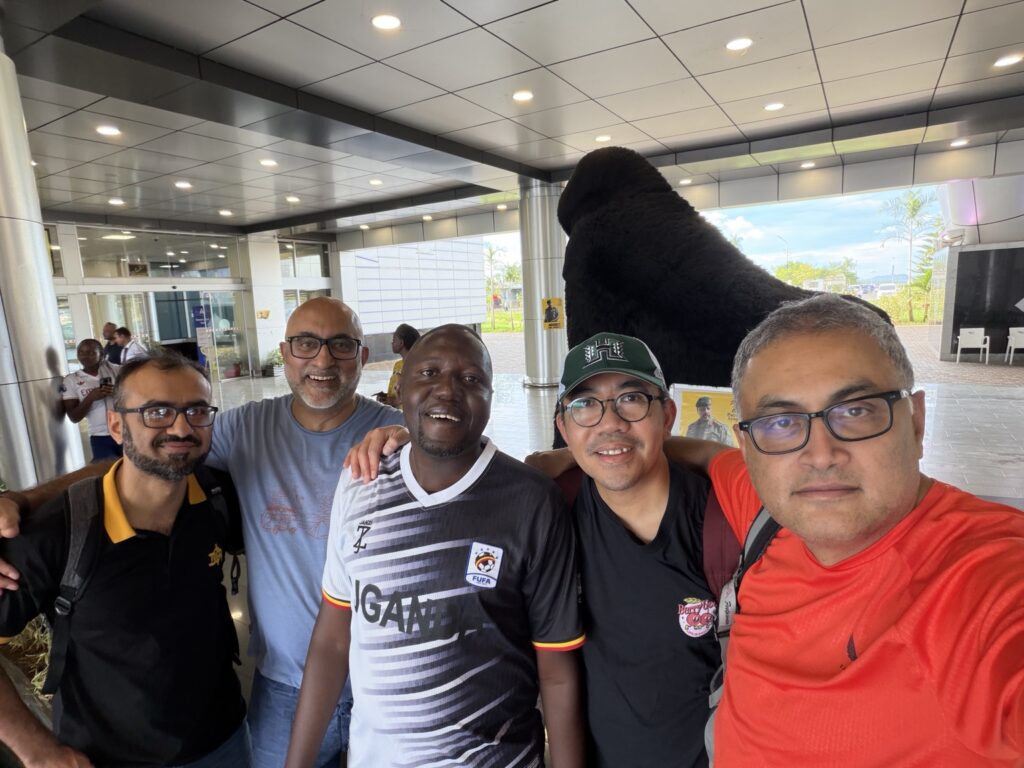
The visiting team during the Uganda surgical mission.
Visiting team: Ajaiya Mull · Ernest Blass · Usman Khalid · Mahesh Pai
Local organiser: Dr Henry Garvin
Hospitals: St Francis Hospital, Jinja, and Herona Hospital
Hernia International
Executive summary
The Uganda surgical visit organized under the auspices of Henria Internation brought the visiting team together with local clinicians and theatre staff to deliver hernia repair surgery across two hospitals. The team completed 59 repairs in 46 patients over five operating days. One postoperative complication, a haematoma, was reported and managed conservatively. The visit was made possible by the organisation, commitment and hospitality of Dr Henry Garvin and his local colleagues.
| 59 | 46 | 5 | 1 |
| Repairs | Patients | Operating days | Reported complication |
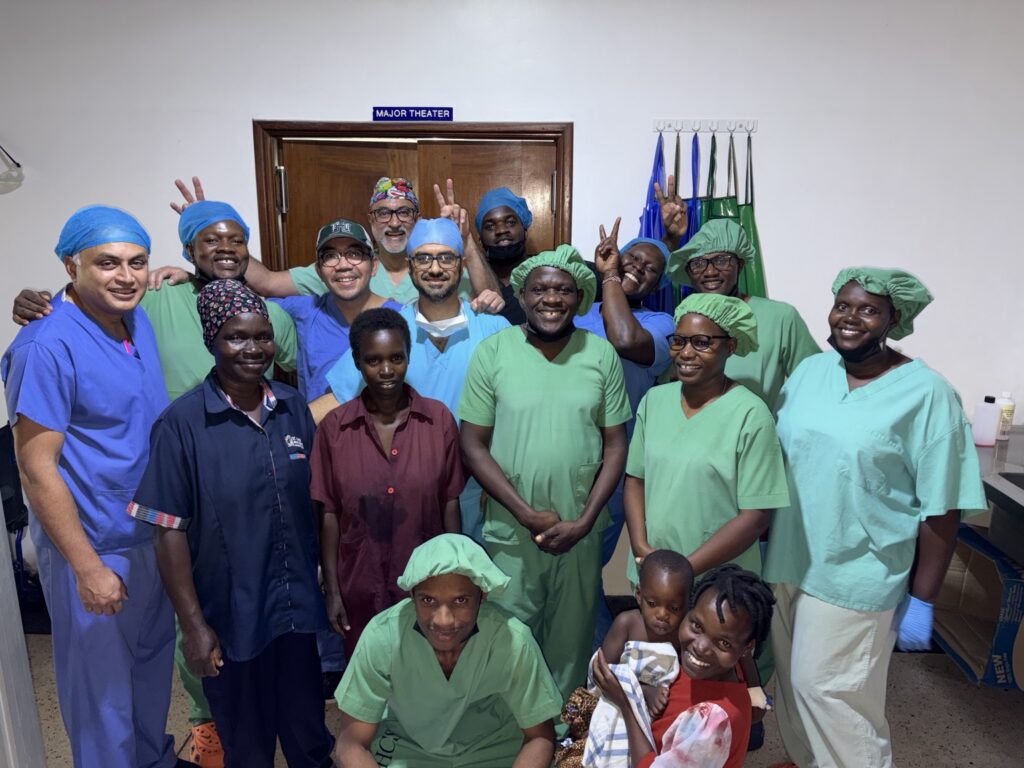
The visiting surgeons and local clinical team St Francis Jinja.
Team and collaboration
The visiting team comprised Ajaiya Mull Consultant anesthetist, Ernest Blass Operating department practitioner (ODP), Usman Khalid consultant transplant and general surgeon and Mahesh Pai consultant vascular and general surgeon and team leader. Dr Henry Garvin coordinated local arrangements, including airport collection, transport, hospital liaison and day-to-day practical support. Local doctors, nurses and theatre staff were welcoming, helpful and integral to the success of the visit.
Travel and transport
A visa is required for all UK citizens and most people travelling from Europe. This can be obtained with an online application at the local Ugandan embassy for US$50. We were recommended to travel on a tourist Visa. The outward journey was uneventful. Dr Garvin met the team at Entebbe airport and had arranged transport onward to Jinja. The drive took approximately three to four hours, including a stop for refreshments. Traffic conditions can vary considerably, so future teams should allow generous time for road transfers.
The team had been advised that medical equipment, particularly medicines, could be subject to checks at the airport. Dr Garvin had liaised with security personnel to explain that the equipment was for charitable use. A minor delay affecting one team member was resolved after telephone calls. Future teams should coordinate documentation and clearance arrangements with the local organiser before travelling.
Accommodation
The team stayed at the Two Friends Hotel in Jinja. Rooms were spacious and comfortable, with air conditioning, Wi-Fi and an excellent restaurant. Accommodation in Kasoga was clean and the food was very good, although air conditioning were unavailable and Wi Fi was hit and miss.
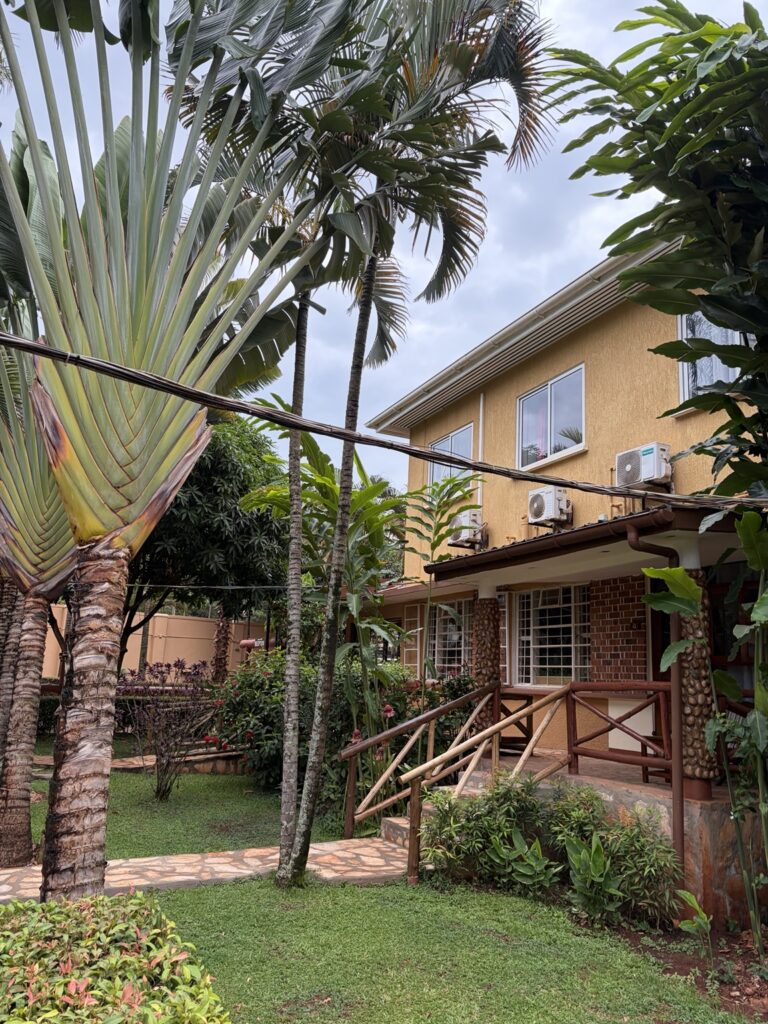
Accommodation and grounds at Jinja
Hospitals and facilities
St Francis Hospital in Jinja was approximately 15 minutes from the hotel. The local team, including Dr Anthony and Dr Ian, had arranged for patients to attend; several were waiting on arrival. Assessment was completed promptly and operating began at around 9.30 am.
The hospital had one operating theatre, with sufficient space for two operating tables. There was a single operating light, so the headlights brought by the visiting team proved useful. Herona Hospital in Kasoga was also a well-equipped hospital with a busy outpatients. There was one operating theatre with large outer theatre space which accommodated another theatre. Both theatres had an operating light and. A diathermy machine as well as an anesthetic machine.
Both hospitals had inpatient wards. Both hospitals were clean and well maintained, and the theatre facilities were adequate for the work undertaken. The team brought essential consumables, including sutures, gowns, intravenous fluids and skin-preparation solutions. Mesh for hernia repairs was sourced locally using pre-cut mosquito netting and sterilised locally. Both hospitals had effective autoclave services, allowing instruments to be turned around promptly and helping maintain the operating schedule. We also carried local anesthetic drugs sufficient for up to 100 patients along with an anesthetic portable monitoring machine and a Defibrillator which were donated to the hospital.
All the patients were kept in overnight. They were all given one dose of antibiotics and reviewed the following day before discharging them.
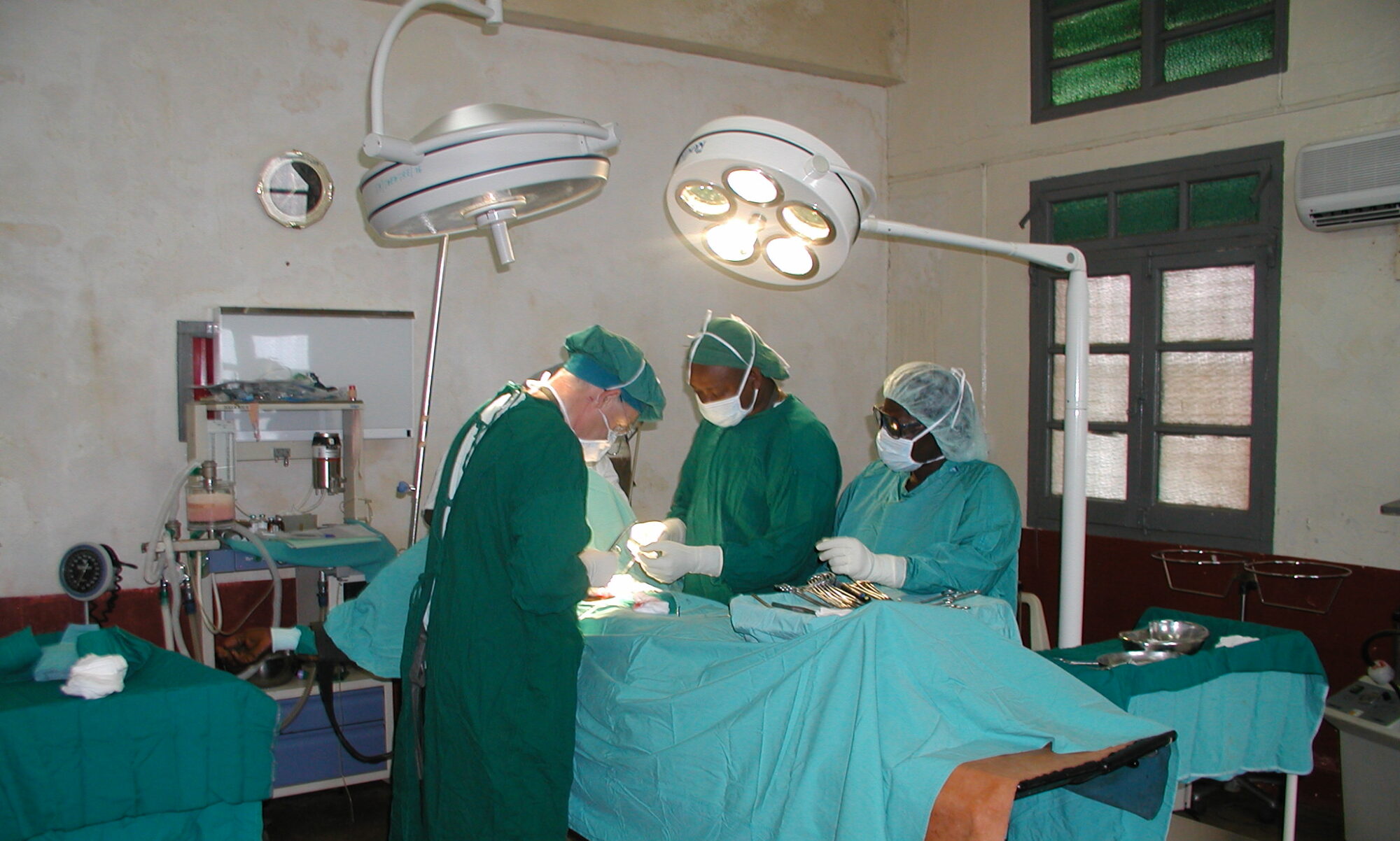
An operating room at St Francis. The visiting and local teams at Herona.
Surgical activity and outcomes
| Operating day | Activity |
| Day 1 | 12 repairs in 9 patients |
| Day 2 | 16 repairs in 12 patients |
| Day 3 | 11 repairs; theatre time was shared with a local paediatric surgeon |
| Day 4 | 10 repairs as patient numbers declined |
| Day 5 | 10 repairs at Herona Hospital after the team moved from St Francis |
| Total | 59 repairs in 46 patients |
Patient flow slowed towards the end of the week. As no further patients were expected at St Francis on the Friday, the team discussed the situation with Dr Garvin and transferred the final operating day to Herona Hospital, approximately 45 minutes away.
One postoperative complication was reported: a haematoma managed conservatively. After 48 hours it had not expanded, and the patient’s pain had settled considerably. The patient was discharged with antibiotics.
Local support, hospitality and safety
The doctors, nurses and scrub teams were exceptionally friendly and supportive. A good working relationship developed quickly, and their contribution was central to the smooth running of the lists. Tea, coffee, cold water, snacks and meals were readily provided. Some of this was bought from local restaurants. We contributed $100 towards this. Of note there was an excellent coffee shop enroute to the hospital. The local food was delicious, with particular appreciation for the tilapia fish from the Nile and Lake Victoria region.
On Thursday we were privileged to visit the neighboring facility which looked after children with extreme malnutrition some of whom also had HIV as inpatients. They would often stay there for months until fully rehabilitated.
The team also had some free time on Thursday and Friday evenings to explore the area. A visit to the source of the River Nile was a particular highlight. Team members felt safe throughout the stay; some went running regularly and felt comfortable doing so. The local population were friendly and welcoming. Where patients spoke limited English, local colleagues helped with translation.
Acknowledgements
We are sincerely grateful to the local doctors, nurses and hospital staff for their professionalism, generosity and hospitality. Special recognition goes to Dr Henry Garvin, who worked tirelessly to organise and support every aspect of the visit. His commitment was inspiring, and he was already planning further visits by other surgical teams as our mission concluded. We would also like to thank Hernia International for making this possible.
Costs and recommendations for future teams
| Item | Indicative cost |
| Economy flights | £900–£1,000 per person |
| Hotel accommodation and food | US$100 per day, including dinner |
| Airport transfer | US$260 one way |
| Approximate total | US$2,000 |
These figures are indicative and should be confirmed when planning future visits.
1. Liaise early with the local organiser about airport clearance and documentation for donated equipment and medicines.
2. Allow generous time for road transfers, particularly between Entebbe and Jinja.
3. Bring essential equipment such as headlights and confirm theatre requirements in advance.
4. Plan supplies carefully and agree local arrangements for mesh, sterilisation and instrument turnover.
5. Coordinate patient recruitment and theatre availability with local clinicians, while retaining flexibility to respond to changing patient numbers.
6. Confirm VISA accommodation, transport and budget assumptions before departure. Yellow fever certificates are not needed for Uganda.
Conclusion
The Uganda surgical visit was a rewarding professional and personal experience. The team completed 59 repairs in 46 patients over five operating days, with one reported complication managed conservatively. The hospitals provided adequate facilities, and the commitment of local clinicians and theatre staff made the work possible. We are particularly grateful to Dr Henry Garvin for his exceptional organisation and support. The visit strengthened professional relationships and provides a strong foundation for continued collaboration and future surgical missions.